Chatrandom alternatives: how to choose the right kind of chat platform
Blog

Start with the reason you want a Chatrandom alternative
Searching for Chatrandom alternatives can lead to long lists of apps that appear similar but solve very different problems. Some are designed for quick conversations with strangers. Others organize people around shared interests. A third group helps businesses answer leads and customers through social messaging.
Before comparing names, decide what you actually want from the next platform. Are you trying to meet someone new for a casual conversation, join a recurring community, or manage messages connected to a business? That choice matters more than finding a service with the closest-looking home screen.
Choose the conversation you want
- Random social chat: You want spontaneous one-to-one conversations and expect to move quickly between people.
- Interest-based discovery: You would rather meet people through a shared topic, language, hobby, or community.
- Ongoing relationships: You want profiles, groups, moderation, and a reason to speak to the same people again.
- Business conversations: You need to answer questions, qualify leads, follow up, or understand which messages lead to bookings or sales.
These categories overlap, but they should not be treated as identical. A random video chat platform may be useful for discovery while being a poor place to build a lasting community. A normal social inbox may be fine for occasional messages while becoming difficult to manage when conversations affect revenue.
If your real problem is handling Instagram leads rather than meeting strangers, try Mochi free for 7 days and organize the conversations already entering your business.
How to compare random video chat alternatives
Once you know that random or social video chat is the right category, compare each option against the same practical criteria. Do not choose from a headline that calls one platform the “best.” The best option depends on what you are willing to share, how much control you want, and what kind of people you hope to meet.
1. Privacy and identity
Check what the service requires before you can enter a conversation. Look for clear information about accounts, profile visibility, camera and microphone permissions, data handling, blocking, and account deletion. Share as little personal information as necessary, especially during a first conversation.
2. Moderation and reporting
Random matching creates unpredictable interactions. A useful alternative should make it easy to leave, block, and report another participant. Read the platform’s current rules and moderation information directly rather than assuming that a “safe” label removes every risk.
3. Matching controls
Decide whether fully random matching is actually what you want. Language, region, topic, or interest controls can make conversations more relevant, although availability and access may differ between services or plans.
4. Device and access requirements
Confirm whether the platform works where you intend to use it. Consider browser access, mobile availability, sign-in requirements, camera controls, and any paid restrictions. Test the basic experience before committing to a subscription.
5. Community quality
A large audience does not guarantee a good conversation. Consider whether the platform encourages respectful participation, gives people a reason to stay, and provides enough context to start something more meaningful than a repeated greeting.
6. Cost and limits
Review current pricing on the provider’s own website. Filters, longer sessions, removal of advertising, or other controls may sit behind a paid plan. Compare the cost of the features you will genuinely use rather than the cheapest advertised entry point.
When a random chat alternative is not the real answer
Sometimes the search begins with a chat platform but the underlying goal points somewhere else. If you want repeat conversations, a moderated community may be a better fit. If you want professional networking, use a platform where identity and context are part of the interaction. If you are trying to answer customers or sell through Instagram, you need a system built around lead ownership, follow-up, and outcomes.
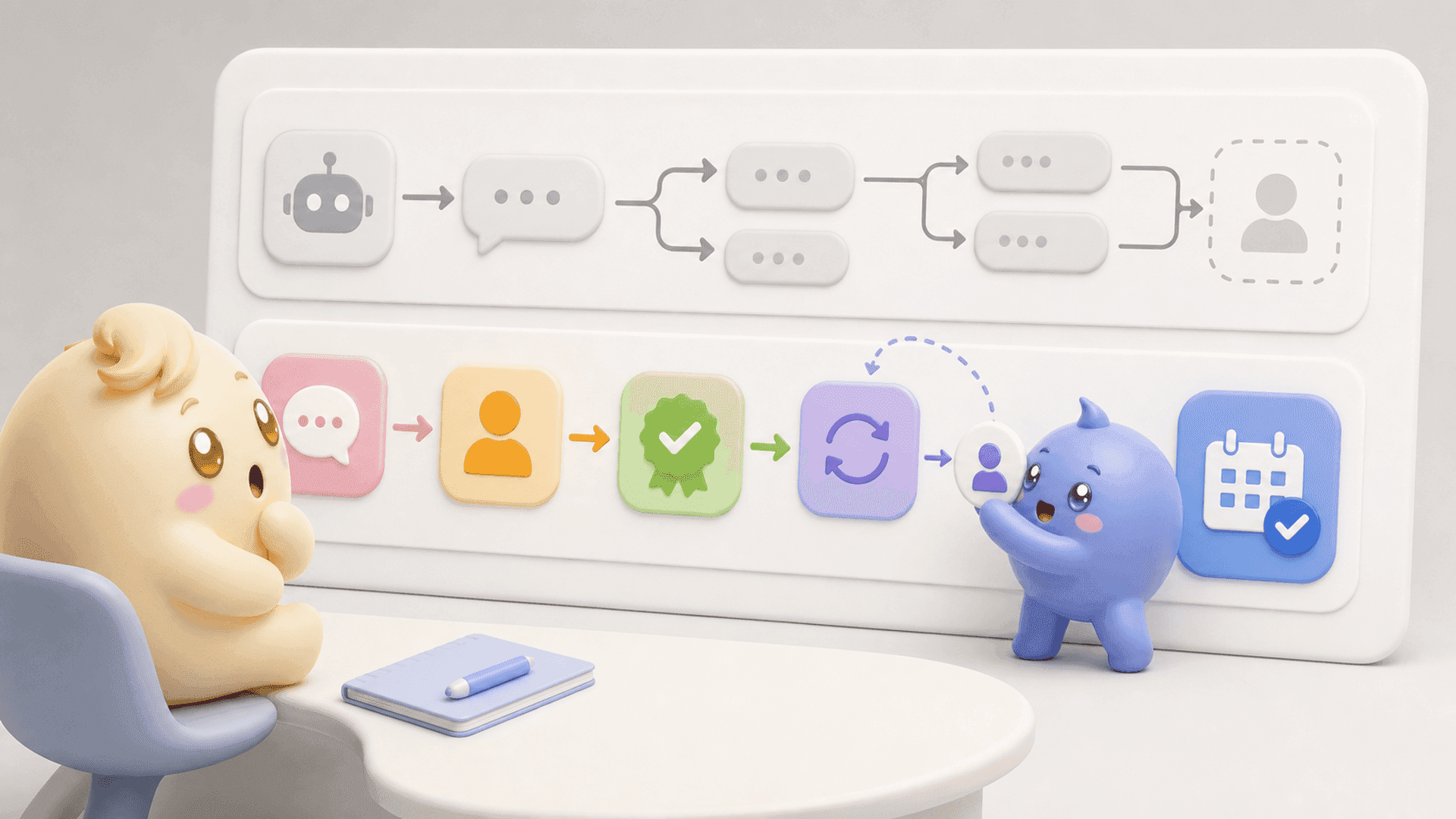
This distinction becomes important for coaches, creators, and digital-product businesses. Their Instagram DMs may look like ordinary chats, but each conversation can sit inside a journey from content to qualification, a calendar link, a booked call, and eventually a customer.
Instagram normally puts the newest message near the top. That means a fresh compliment can attract attention while a qualified person who already asked about the offer waits lower in the inbox. When more messages arrive, the person handling the DMs may also forget who needs a follow-up or what an interested lead said earlier.
What a business messaging system should show
- Which conversations deserve attention first
- Who is responsible for each lead
- Who is qualified or waiting for a follow-up
- What the person already said and what matters for the next reply
- Whether a calendar link was sent, opened, or followed by a booking
- Where conversations entered the funnel and where they stopped moving
Mochi is built for this business use case. It helps coaches, creators, and info businesses treat Instagram DMs as a sales channel. The team can organize conversations by stage, filter for qualified people, schedule follow-ups, see conversation summaries, and understand how leads move toward booked calls or customers.
That makes Mochi a different category from Chatrandom. It is not a random video chat replacement. It is relevant when the word chat means Instagram conversations that the business needs to manage and understand.
If that is the problem behind your search, try Mochi free for 7 days and see what happens after people enter your DMs.
A simple checklist before choosing
Use a short test instead of opening several platforms and hoping one feels right.
- Name the outcome. Write down whether you want spontaneous discovery, shared-interest conversations, an ongoing community, or business results.
- Set your boundaries. Decide what identity details, permissions, and personal information you are comfortable sharing.
- Check current policies. Review moderation, reporting, privacy, availability, and pricing on the provider’s own website.
- Test the exit controls. Make sure you can leave, block, report, and manage access to your camera or microphone easily.
- Judge the conversation quality. Ask whether the matching system and community produce the kind of interaction you wanted.
- Choose a system that fits the stakes. Casual chats can remain casual. Conversations tied to customers, booked calls, or sales need ownership, context, follow-up, and visibility.
The strongest Chatrandom alternative is not automatically the platform with the longest feature list. It is the one that matches the type of conversation you want while giving you acceptable control over privacy, moderation, and cost.
For a business receiving sales conversations through Instagram, the need is clearer: stop treating valuable leads like random messages. Try Mochi free for 7 days and give the conversations already inside your inbox a clear next step.