How to Organize Instagram DMs for Sales Teams
Blog

Instagram DMs often begin as a simple channel: somebody replies to a Story, comments on a post, or asks a question about an offer. The founder answers, remembers the conversation, and follows up later.
Then the content starts working. More people message. A setter joins the business. Another team member helps during launches. The inbox still looks like a list of chats, but it is now carrying a sales process that the list was never designed to manage.
The usual response is to tell the team to reply faster. Speed matters, but it is not the whole problem. A team can answer messages all day and still miss the conversations most likely to become qualified calls. The real goal is to give every conversation a clear owner, priority, next action, and history.
Why the native Instagram inbox becomes difficult for sales teams
Instagram naturally brings the newest activity to the top. That is useful for messaging, but it is a weak way to decide what a sales team should do next.
A new compliment can appear above somebody who already explained their problem and asked for a booking link. A fresh Story reply can distract the setter from a qualified lead waiting for an answer. A conversation that needs a follow-up can disappear as soon as more messages arrive.
The inbox also does not explain the state of the sale. Looking at a username alone does not tell the team whether the person is new, qualified, waiting for a link, considering the offer, or overdue for follow-up. Once several people share the inbox, the team can also lose track of who owns each conversation.
If qualified conversations are getting buried under random new messages, try Mochi free for 7 days and organize the leads already inside your Instagram inbox.
Build your Instagram DM workflow around stages
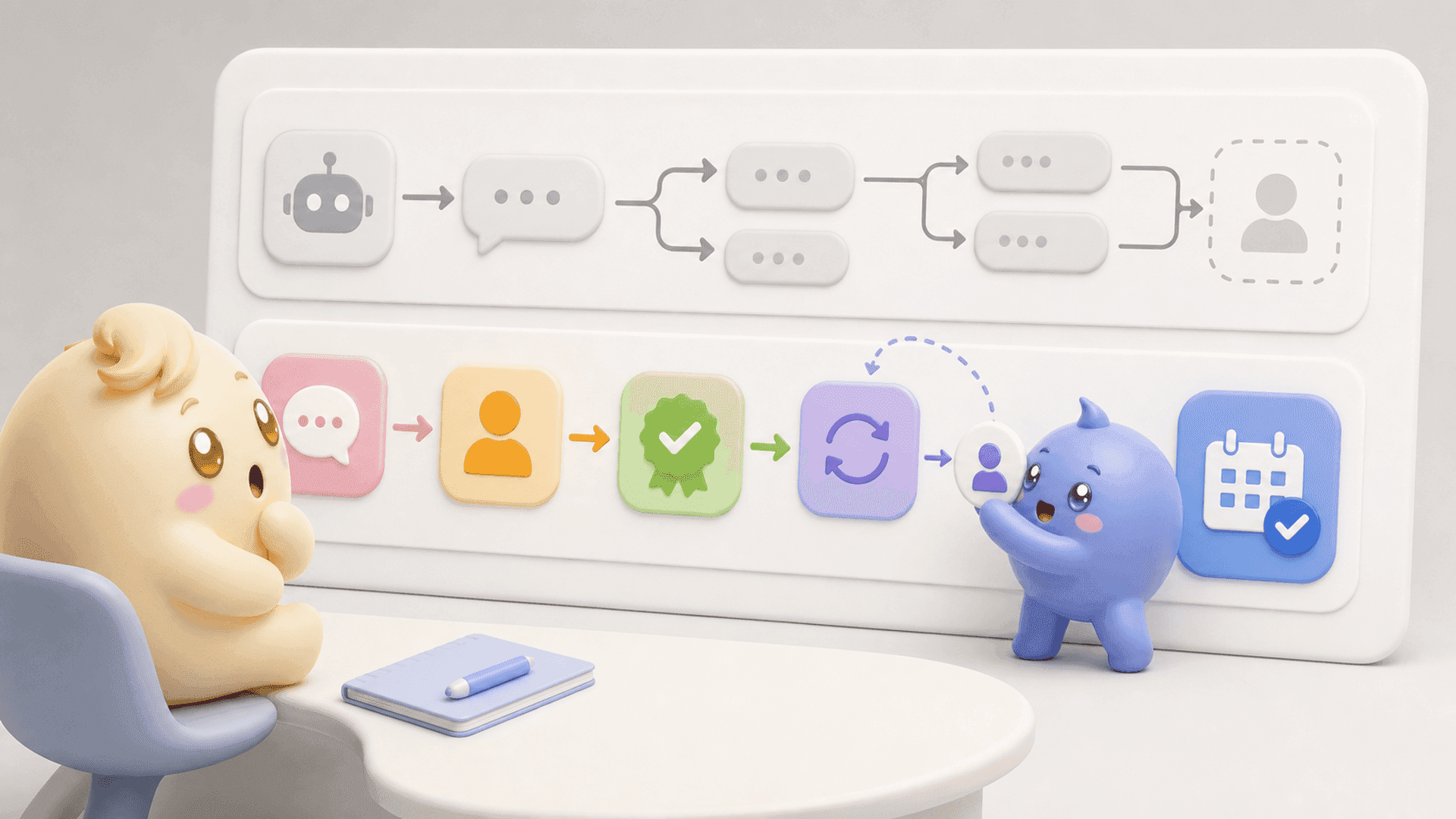
The first step is to stop treating every message as equal. Give conversations a small set of stages that describe what should happen next.
A practical starting structure is:
- New: the person has entered the inbox and needs an initial response.
- In conversation: the team is learning about the person and their situation.
- Qualified: there is enough information to know the person may be a good fit.
- Booking: the next action is sending or completing the booking step.
- Follow-up: the conversation is still relevant, but the team is waiting or needs to restart it.
- Closed: the conversation has reached its outcome and no immediate action remains.
Use the fewest stages that your team can apply consistently. A complicated pipeline that nobody updates is less useful than six clear stages that everybody understands.
For each stage, write down one rule: what must be true before a conversation enters it, and what action should move it forward. This prevents one setter from marking any friendly reply as qualified while another waits until a call is booked.
Assign one owner to every active conversation
Shared responsibility often becomes no responsibility. If two setters can both assume the other person will reply, the lead waits.
Every active conversation should have one owner. That person is responsible for the next action until the conversation is deliberately reassigned. Ownership does not prevent a manager from reviewing the chat or another setter from helping. It simply makes the responsibility visible.
Create a clear handoff rule as well. When a lead moves between setters, the new owner should be able to see the stage, important context, and next action without rereading the full thread or asking the lead to repeat everything.
Prioritize by the next best action, not the newest message
A useful work queue should answer one question: which conversation deserves attention next?
Start with the conversations closest to a meaningful next step. A qualified person waiting for a response should usually come before a new person who sent a generic reaction. Somebody who received a calendar link but did not book may deserve attention before a conversation that has not been qualified.
A simple daily priority order could be:
- Qualified leads waiting for an answer.
- People at the booking stage.
- Follow-ups due today.
- Active conversations that need qualification.
- New messages that have not been reviewed.
This does not mean ignoring new messages. It means protecting the valuable conversations the team has already created before they disappear beneath new activity.
Preserve context before writing the next reply
Good DM sales conversations feel like somebody listened. Before replying, the setter should know what the person wants, what problem they described, what objections appeared, and what was promised next.
Without that context, follow-ups become generic. The team sends “Are you still interested?” even though the person already explained that they were travelling and wanted to continue next week. That makes a human conversation feel automated.
Keep a short record of the details that affect the next response. The record should help the setter continue the conversation, not become a second transcript. Useful context includes the person’s goal, relevant problem, timing, objection, qualification status, and agreed next action.
Mochi brings conversation summaries, important details, lead stages, ownership, and the inbox together so the setter can understand what happened before deciding what to do next. If your team is losing context between replies, try Mochi free for 7 days and use it with the conversations already coming into the business.
Create a follow-up system that does not depend on memory
“I will remember to message them later” is not a system. Once the inbox gets busy, later becomes never.
Every follow-up should have a reason, an owner, and a due point. The reason might be that the person asked to return after a launch, needed time to review information, or received a booking link without choosing a time. The follow-up message should continue that specific conversation instead of restarting from zero.
Review due follow-ups before the team spends the day reacting to new activity. At the end of each shift, make sure every active conversation either has a next action or has been deliberately closed.
Measure outcomes instead of message volume
A setter can send many messages without moving enough qualified people forward. Message volume shows activity, but it does not explain whether the process is working.
Track the movement that matters to the business:
- How many new conversations became qualified?
- How many qualified leads received the booking step?
- How many booked a call?
- How many follow-ups received a reply?
- Where do conversations most often stop?
- Which setters, scripts, follow-ups, and content sources create qualified calls?
These questions help the manager coach the right part of the process. If many leads are qualified but few reach the booking stage, the issue is different from a team that receives many conversations but qualifies almost nobody.
A simple daily operating rhythm
Turn the system into a repeatable routine:
- Start with priority: handle qualified leads, booking conversations, and overdue follow-ups.
- Work active conversations: move each one toward a clear next action.
- Review new messages: identify the conversation type, assign an owner, and begin qualification where appropriate.
- Close the loop: update stages, schedule follow-ups, and close conversations that no longer need action.
- Review the numbers: look for where qualified people are waiting or dropping out.
The point is not to make the team answer the largest possible number of messages. It is to stop good conversations from being lost between the first DM and the booked call.
If you want one place to prioritize conversations, preserve context, assign setters, manage follow-ups, and see what creates qualified calls, try Mochi free for 7 days.