Instagram Stories Ads Examples: 7 Swipe-Worthy Story Ad Ideas That Convert
Blog
Why Story ads need a conversation
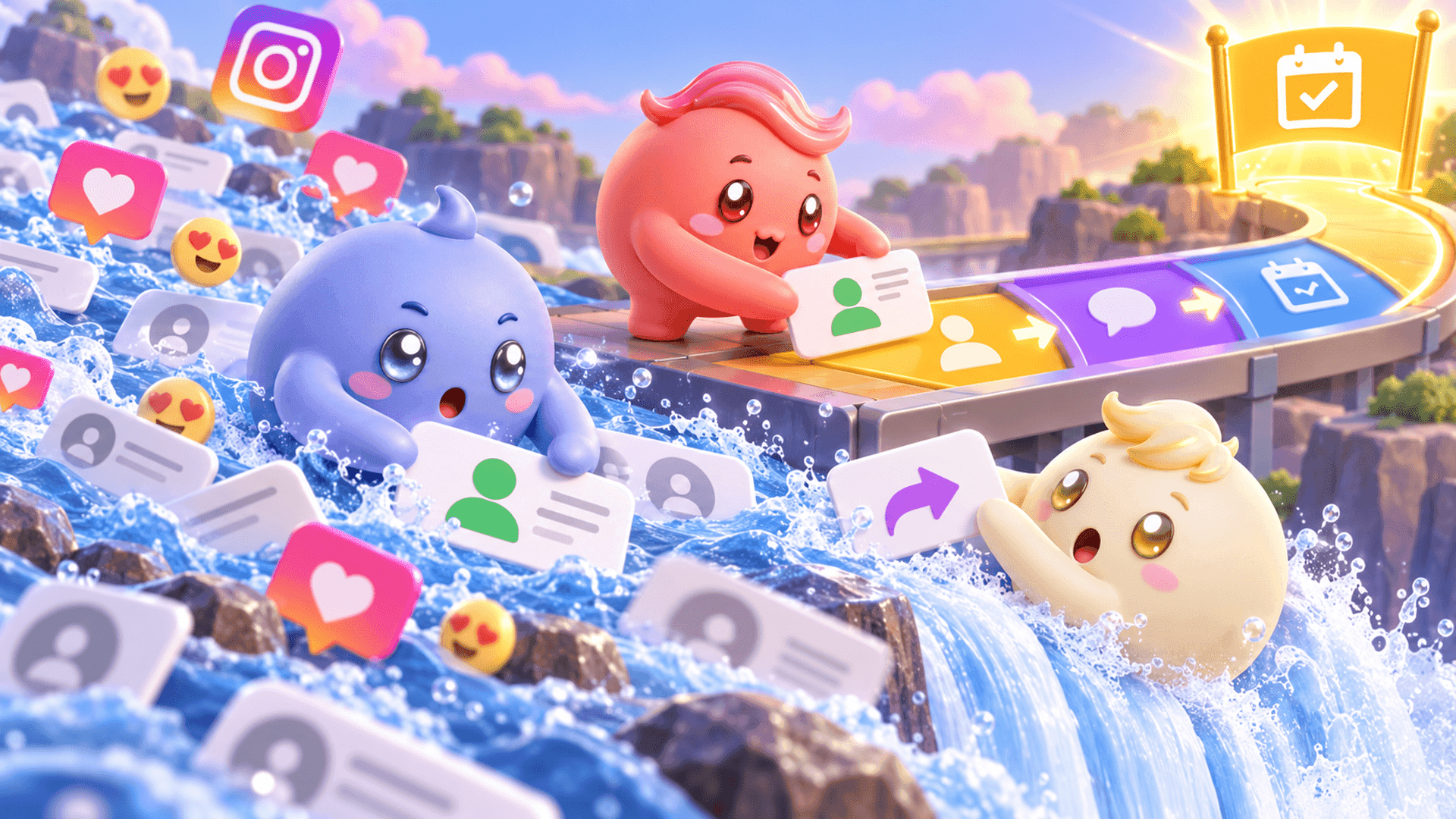
You've seen them. A beautiful Story ad with perfect lighting, a smooth animation, and a clear CTA. And yet, the leads don't come. Why? Because most Story ads are built for the tap, not for the conversation. They send people to a landing page and hope for the best.
But as a coach, creator, or digital product owner, you know that a stranger who taps through from a Story isn't ready to buy. They're curious. The real money lives in the DMs that follow.
When you run a Story ad, every view is a potential conversation. The question isn't 'how many people swiped up?' It's 'how many people actually messaged you, qualified themselves, and became a customer?'
Most brands can't answer that second question because their Story ad ends at the click. The ones that win treat the ad as the opening line of a sales conversation, not the whole pitch.
If you've been running Story ads and seeing cheap clicks but zero sales, this is why.
If you're ready to see what happens after the tap and actually turn Story views into booked calls, you can start a 7-day free trial and see how Mochi organizes the conversations your Story ads start.
Seven Story ad patterns
Here's the breakdown. Each example is a real-world pattern, not a specific brand ad. Use them as inspiration for your next push.
The curiosity gap
The Story shows a bold statement: 'The 5-second trick that got me 20 booked calls this week.' No product. No logo. Just a hook. The CTA says 'DM me '5''. The magic? The curiosity creates a reason to engage. Now the conversation starts with a buyer who already raised their hand.
The objection crusher
The Story shows a common objection text, like 'I want to join but the timing isn't right.' Then a quick text overlay: 'What I tell every student who says this.' The CTA: 'Reply with TIMING.' This opens a DM where your setter already knows the exact objection to handle.
The client Reel prequel
You post a Reel showing a client result. The Story ad is the 'making of' or the 'what happened next.' It teases: 'Watch what Sarah did after her first call...' CTA: 'See the result' → DM. This builds cinematic trust.
The poll that qualifies
You use Instagram's poll sticker but not for engagement. You ask: 'Which is your biggest struggle? A) Not enough leads B) Leads not converting C) No time.' When someone votes, you reply and start a conversation. The ad's goal isn't to sell; it's to start a qualifying conversation.
The social proof stack
The Story shows a rapid-fire montage of 5 DMs: 'Best decision ever!' 'Doubled my revenue.' 'Booked 3 clients today.' The CTA is simply: 'Want what they had? Reply with RESULTS.' Now the lead has social proof before they even speak to your team.
The mini-training
The story is a 15-second tip that actually helps with a problem. The CTA: 'Part 2? Send me the word MORE.' This positions you as the expert and makes the DM the start of a relationship.
The direct pitch with a twist
Instead of 'Link in bio,' you say: 'This is for coaches who want to earn $10k months. I can show you the exact framework we use. If you're serious, DM me the word COACH.' The word 'serious' filters out the tire-kickers. The DM becomes the qualification.
Every one of these examples moves the conversation from public to private. And that's where the sales happen.
Why DM-first Story ads work
Why does the DM approach work so much better than the swipe-up link? It comes down to a simple human truth: we trust conversations more than we trust links. When someone taps a link, they're still a spectator. They can leave and forget.
When they send a DM, they've made a small commitment. They've started a relationship.
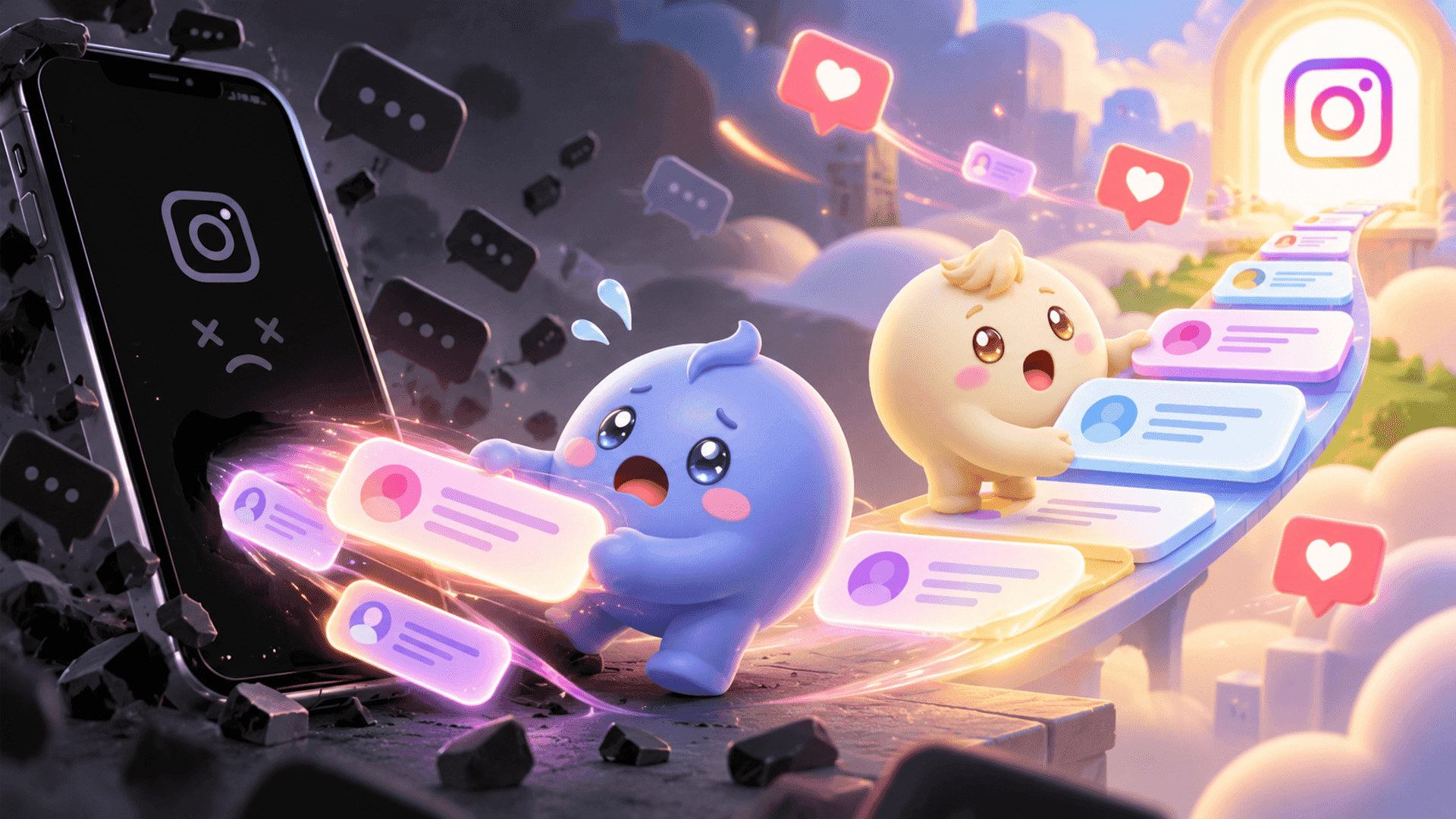
But here's the challenge: if your Story ad brings in 50 DMs, what happens next? Does your team know who replied with the keyword but didn't qualify? Do you know which Story your best lead came from? Or do you lose all of that in a chaotic inbox?
This is exactly where a system like Mochi changes the game. Mochi is an Instagram DM sales system built for coaches, creators, and info businesses. It helps you see who's a qualified lead, who needs a follow-up, and which content is actually creating booked calls.
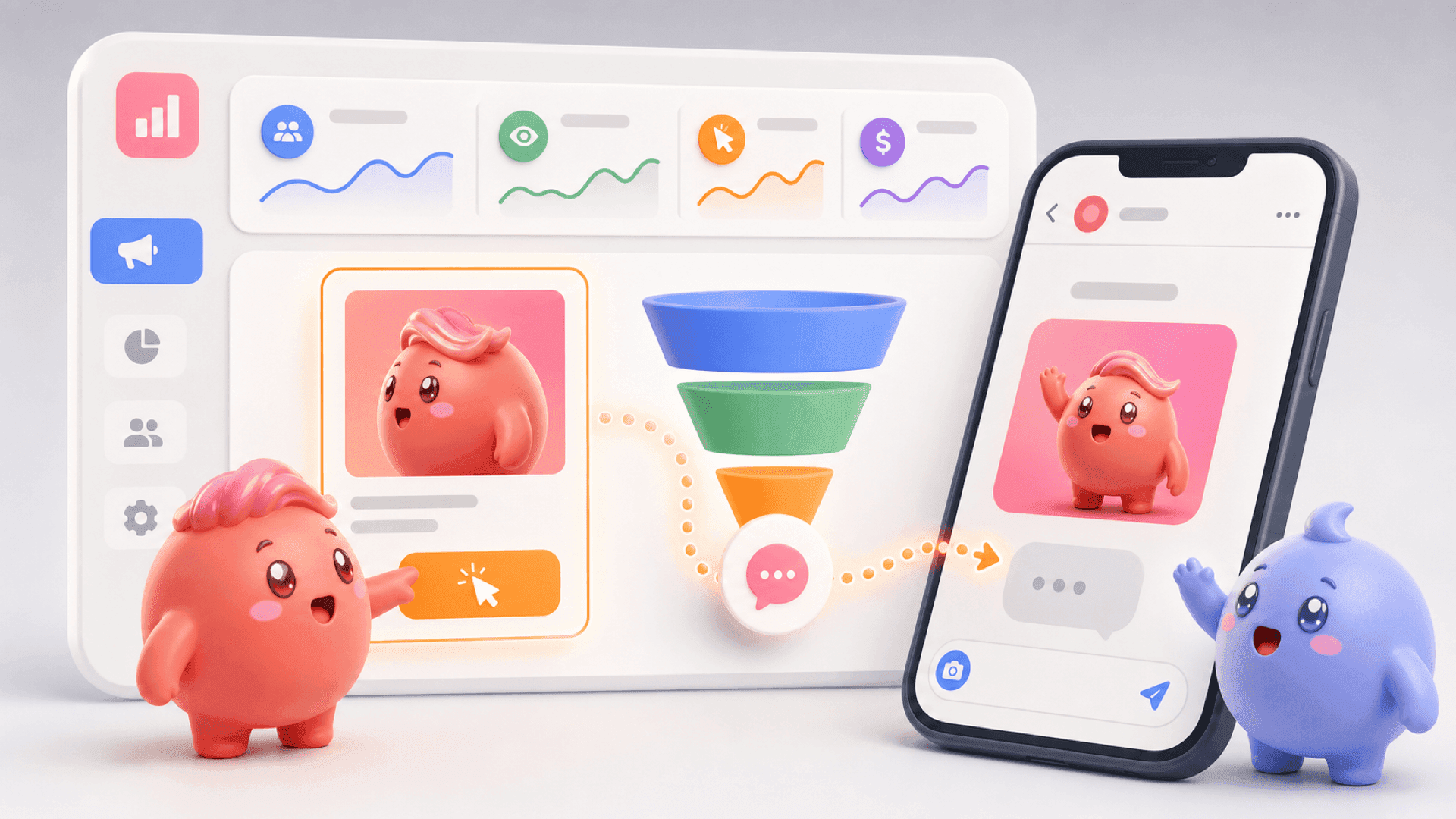
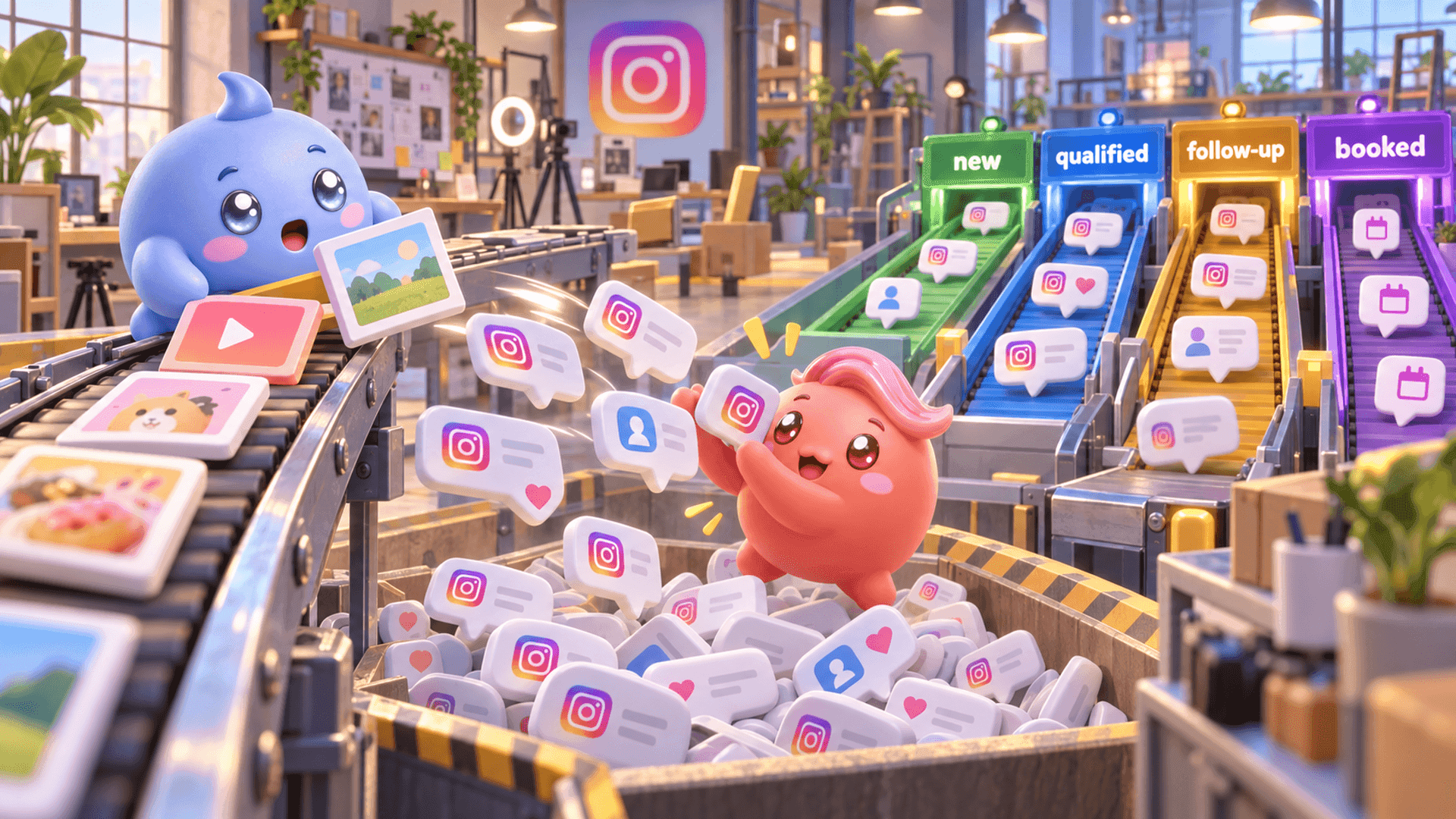
Instead of guessing, you get a clear pipeline: from new lead to qualified to booked call. You can finally answer. 'Which Story brought in the most qualified conversations?' 'Which setter is actually booking calls?' 'Where are people disappearing in my DM funnel?'.
If you want to stop losing qualified conversations under a pile of new messages, you can start a 7-day free trial and see the leads your Story ads are already bringing you, organized and ready to follow up.
Use the DM-First Framework
Ready to apply this to your next Instagram Story ad? Use the DM-First Framework: Desired Outcome, Mechanism, First Message.
1. Define the desired outcome
Don't just say 'get leads.' Say 'get 10 qualified leads who want to book a call.'
2. Choose the mechanism
Pick one of the 7 formats above that fits your audience and your offer. The curiosity gap works for cold audiences. The objection crusher works for warm audiences. The direct pitch works for a targeted, small audience.
3. Design the first message
The most important sentence in your entire ad is the DM you send after the tap. It must continue the conversation, not restart it. If they replied 'PRICING', your first DM should be about pricing, not 'Thanks for your message! How can I help?' Ignore the first-message cliché. Use a conversation starter that addresses their unspoken question.
Then, track everything.
After your Story push ends, review the data. How many people actually entered your DMs? How many became qualified? How many booked calls? If you don't have this, you're flying blind. If you do, you'll start to see which Story topic, hook, and CTA actually generates revenue. That's the difference between a Story ad that costs money and one that makes money.